Fix an old URL with a redirect
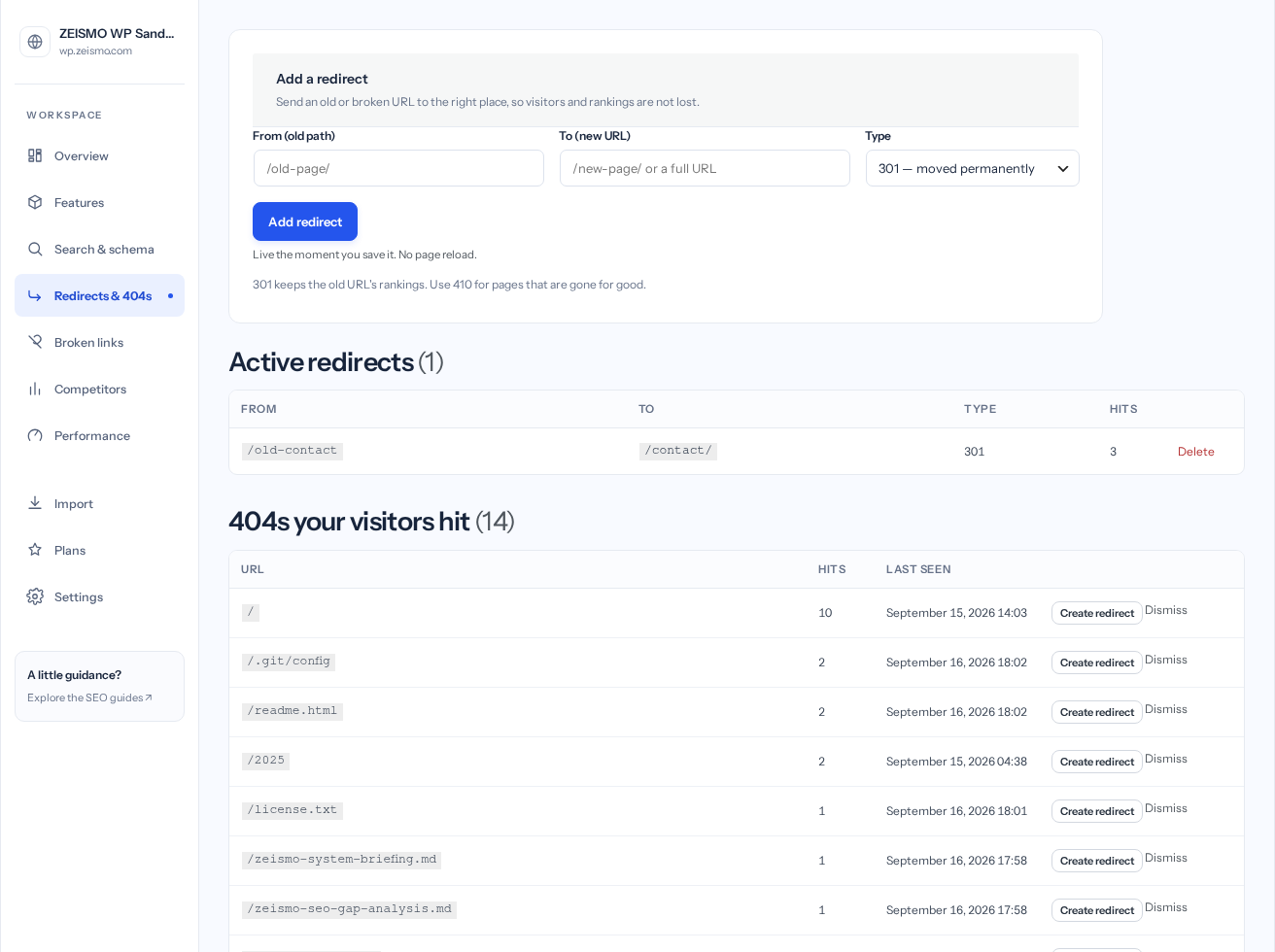
- Find the URL that needs fixing.
Open Redirects & 404s. You can enter an old path directly, or choose Create redirect from a recorded 404.
- Choose the destination and response.
For a permanent move, choose 301 and enter the replacement URL. Use 302 for a temporary move. Choose 410 only when content is intentionally gone; it is not a redirect to another page.
- Add the rule.
Check that the old URL and destination are different, then select the add button. The rule takes effect when saved.
- Test as a visitor.
Open the old URL in a private browser window. Confirm that it reaches the intended page without looping.
Check your result: The old path sends visitors to the intended destination. A saved rule alone is not proof that the destination is correct.
Find and repair broken links
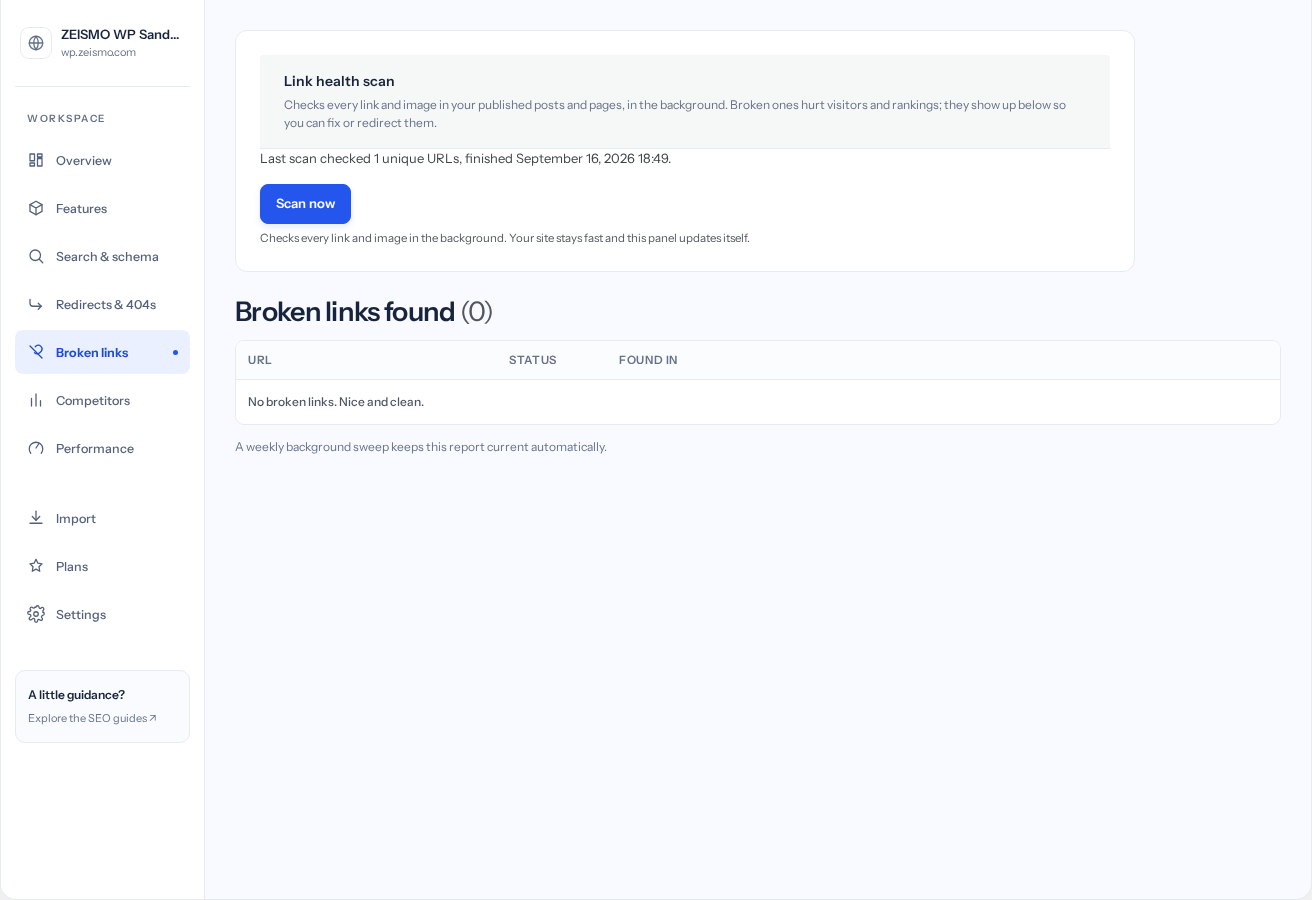
- Start a scan.
Open Broken links and select Scan now. Leave time for the background batches to finish.
- Review each result.
Read the destination, status and source page. Check the URL yourself; some remote sites can reject automated requests.
- Fix the source or add an appropriate redirect.
Edit the page containing the link. For an old internal URL, the Create redirect action can prefill the redirect manager. Dismiss only a result you have reviewed.
- Check again.
Run another scan after your changes and confirm the affected links behave correctly.
Move from another SEO plugin
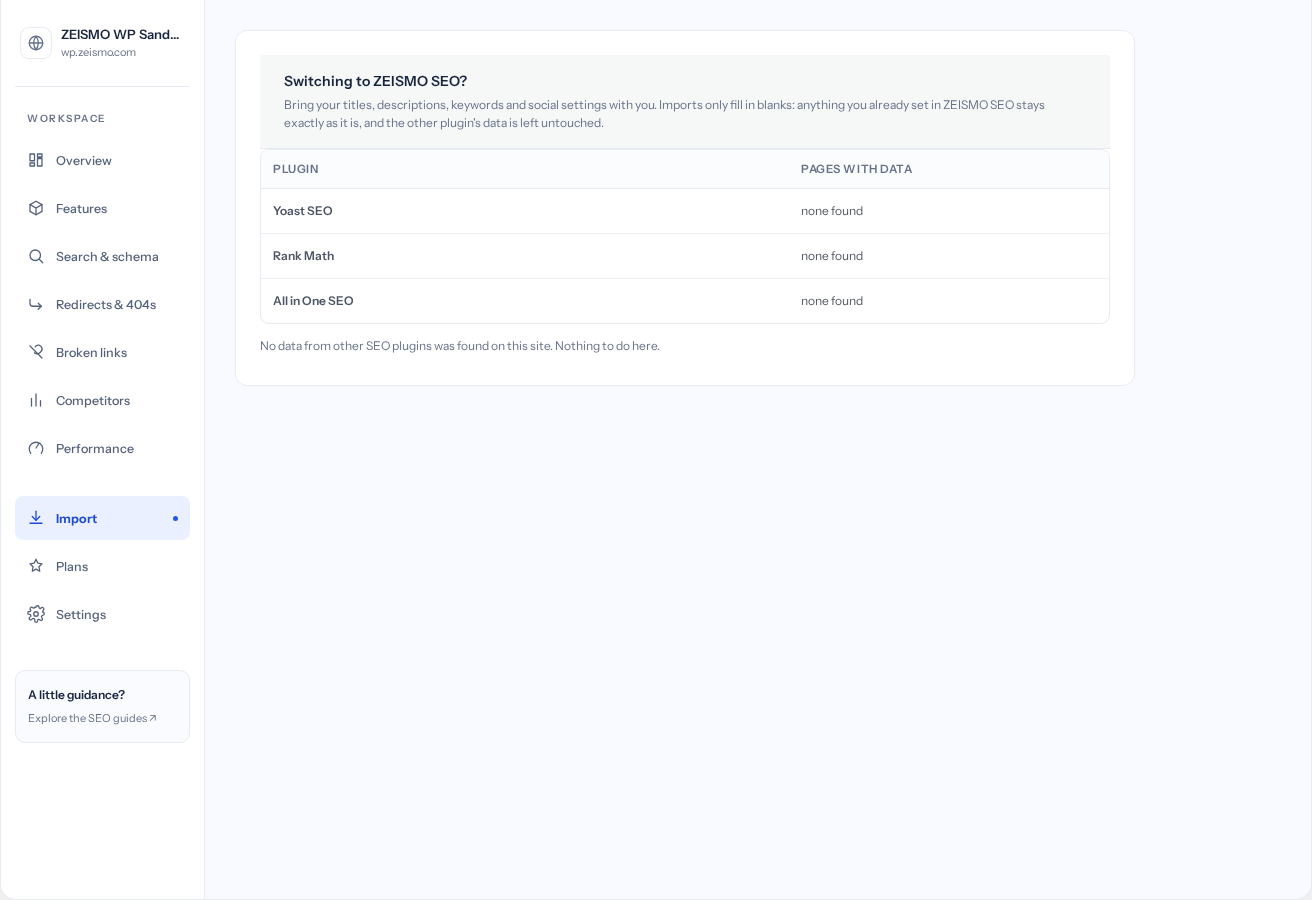
- Back up and identify the source.
Keep a database backup before a migration. Open Import and review the detected Yoast, Rank Math or All in One SEO data.
- Run the matching import.
Select Import for the source you intend to migrate. If no data is detected, there may be nothing available to import.
- Verify several pages.
Open representative posts and pages. Check their SEO titles, descriptions, keywords and supported social fields. Existing nonblank ZEISMO values are preserved.
- Finish the switch.
Deactivate the overlapping SEO plugin after verifying the migration. Check public metadata and your sitemap before removing anything permanently.
Compare on-page content
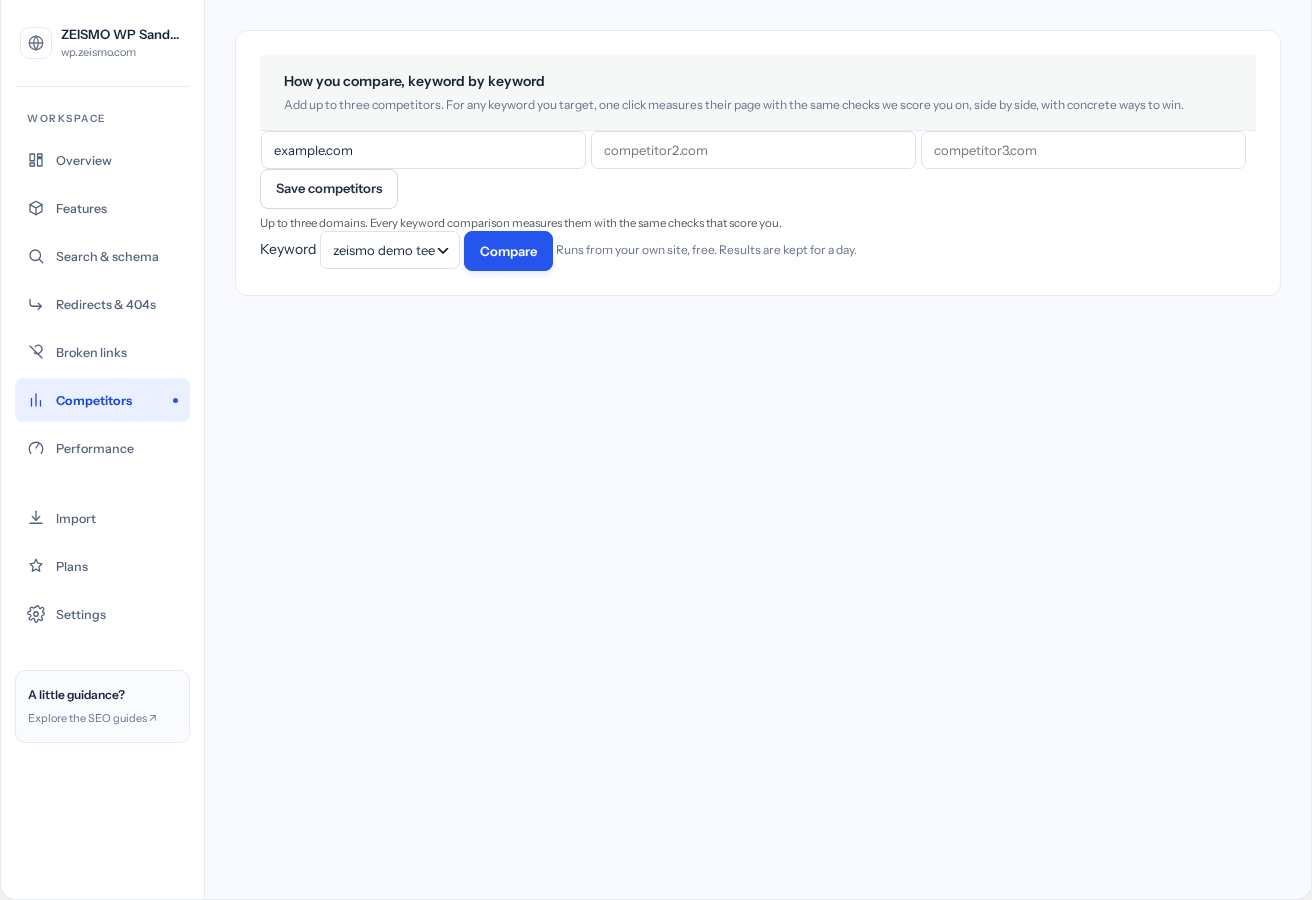
- Set a focus keyword on one of your pages.
Save the page so its keyword can appear in the comparison selector.
- Save competitor domains.
Open Competitors, enter the relevant domains and select Save competitors. Your plan and distribution determine the available limit.
- Choose a keyword and compare.
Select a keyword and press Compare. Review the returned page and its measured content signals before deciding what to improve.
Read a ZEISMO performance check
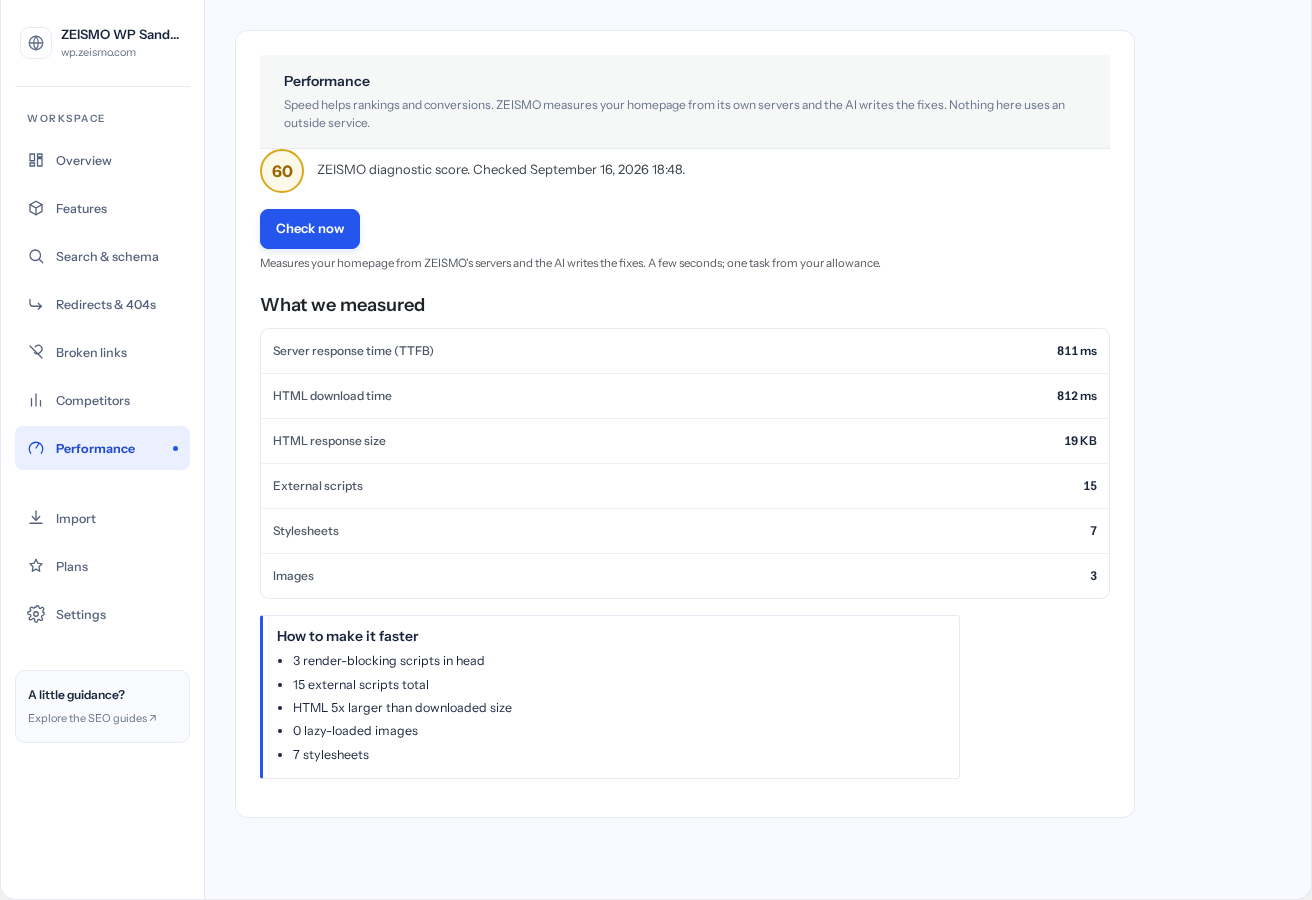
- Confirm the feature is available.
Open Performance. The screen explains if an account connection or eligible plan is required.
- Select Check now.
ZEISMO fetches your homepage from its own servers. The check uses the task allowance described by the screen.
- Read the timestamp and measurements.
Review server response time, HTML download time and size, plus the reported script, stylesheet and image counts.
- Review recommendations before making changes.
Apply appropriate changes through your normal site workflow, then run a new check to compare.